PERSUASION STRATEGY
Belief is Essential for Successful Persuasion and Intrinsically Associated with The Emotional Brain
Nobody buys anything they don’t believe in.
That sounds obvious, but think about what it means. Every purchase is a bet on the future. The buyer can’t know whether the software will be adopted, whether the agency will deliver, or whether the new hire will work out. They can’t test it in advance. So something has to close the distance between what they know and what they’re willing to commit to.
That something is belief. And belief turns out to be far stranger, and far more emotional, than most people trying to earn it realize.
Knowing Isn't Believing
Most business communication aims to create understanding: here’s what it does, here’s how it works, and here’s the data. Understanding matters. But you can fully understand an offer and still not believe it will work for you.
That’s usually why a well-built case falls flat. You gave someone a reason to know something, but not a reason to believe it.
The Nike Putter
In a study published in the Journal of Consumer Research, researchers from the University of Kentucky, the University of Notre Dame, and Penn State gave golfers the same prototype putter. About half were told it was made by Nike; the rest weren’t told the brand.
Same putter, same course, similar golfers. Those who believed they were holding a Nike needed significantly fewer putts to sink the ball.
Belief didn’t just change what the golfers thought about the equipment. It changed how well they played.
The researchers tested the same idea with a math test. Participants wore identical foam earplugs, and some were told they were made by 3M. That group answered significantly more questions correctly.
Two details make the study especially useful for anyone in business.
First, prestige alone wasn’t enough. Golfers told their putter was a Gucci did no better than those told nothing. Only a brand they believed was relevant to performance made a difference. People don’t respond to impressiveness in general; they respond to proof that relates to what they care about.
Second, the effect was strongest for novices. Experienced golfers already believed in their own skill and gained little extra. The less someone knows, the more belief has to carry. Think of your newest prospect, your first-time buyer, or the investor outside their usual sector.
Belief didn't just change what the golfers thought about the equipment. It changed how well they played.
The Expensive Wine
At Caltech, researchers scanned people’s brains as they sampled wine. Participants were told the wines had different prices, though some were actually identical.
People said they enjoyed the “expensive” wine more. Brain scans showed this was more than politeness or wishful reporting: activity increased in the medial orbitofrontal cortex, a region associated with experienced pleasure.
What people believed about the wine changed how much they enjoyed drinking it.
Where Belief Lives
So what is belief, physically? A 2008 study at UCLA scanned people while they judged statements true or false: some mathematical, some factual, some ethical. Belief showed up mainly in a region called the ventromedial prefrontal cortex, which the researchers described as linking belief to the brain’s systems for emotion and reward. Believing a math fact looked much like believing an ethical claim, so the brain seems to handle belief in a similar way whatever the subject. A follow-up study with more than twice as many participants found the same thing.
What happens when that region isn’t working tells us even more. At the University of Iowa, researchers showed subtly misleading advertisements to patients with damage to the ventromedial prefrontal cortex. Those patients were roughly twice as likely to believe the ads, even after being shown a correction.
The researchers’ conclusion is striking: believing appears to be the brain’s default, and doubt is the extra step that takes effort. We tend to accept first and question second, if we question at all.
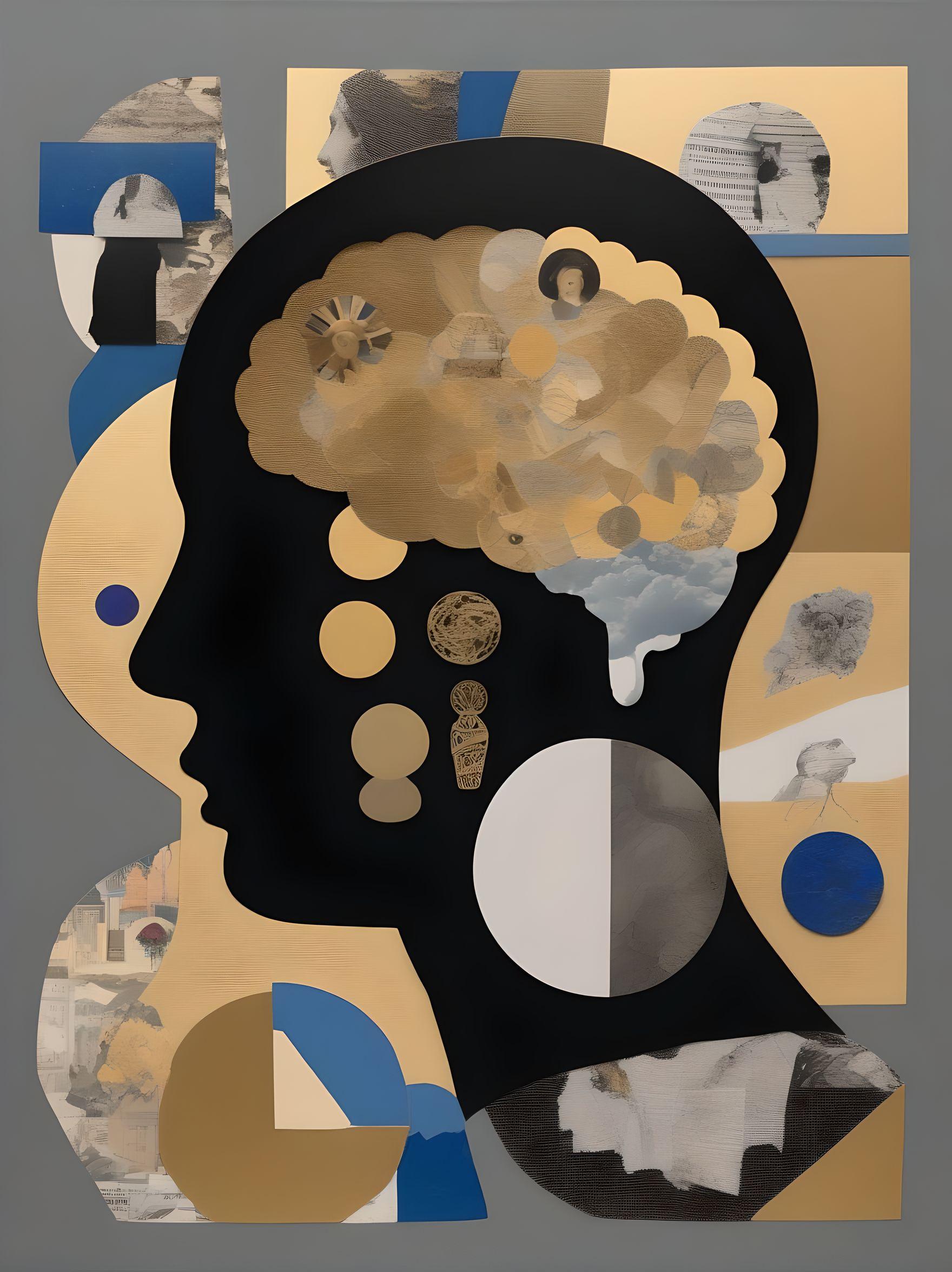
Belief isn’t simply logic’s verdict. It’s a judgment with emotion built into it.
Why Belief Is So Hard To Move
Once a belief is set, it holds on. At the University of Southern California, researchers challenged people’s beliefs with counterevidence while scanning their brains. On everyday topics, beliefs shifted a bit. On deeply held beliefs, they barely moved.
The people who resisted most showed more activity in the amygdala and the insula, regions tied to emotion, threat, and how we feel about what we’re hearing. Challenging a deeply held belief engaged the same systems the brain uses to protect itself. As lead researcher Jonas Kaplan put it, “We should not expect to be dispassionate computers.”
That’s why belief is hard to earn and hard to lose, much like a reputation. Once someone believes in you, it’s close to unshakeable. Until they do, being right won’t get you there. And if they already believe in something else, such as their current vendor or their current way of doing things, more facts may only make them dig in.
Why This Matters For Anyone Who Needs A Yes
Put those findings together:
That’s why the most thoroughly informed pitch can lose to a less complete one that connects. One created understanding; the other created belief.
Each study is small, involving 14 to 40 people. Taken individually, each offers a hint. Taken together, they point consistently in the same direction.
Earning It
If belief is what you’re after, the question is how to create it. That’s what the seven triggers are for. Each offers a path to belief that facts alone can’t provide:
Because what activates each trigger differs from person to person, earning belief starts with knowing the individual: what they already believe, what they hope for, and what proof would count for them.
Belief built on real proof, genuine connection, and real value holds up and keeps paying off.
One Caution
Several of the studies above worked by telling participants something that wasn’t true, and the Iowa study shows how easily misleading claims can take hold. That’s useful to know. It’s not a strategy.
Belief built on false claims lasts only until reality catches up—and then your reputation suffers, too. Belief built on real proof, genuine connection, and real value holds up and keeps paying off.
Belief comes first. But it has to be earned, and it has to be true.
Close the Winnable Deals Gap
Even the best practices have them: a 30-50% gap between business on the books and lost opportunities. The 7 Triggers framework has consistently helped increase sales for some of the world's highest performing teams by an average of 30%. What would a lift like that mean for you?

Add persuasion intelligence to your process and produce more yes.
